


Introduction
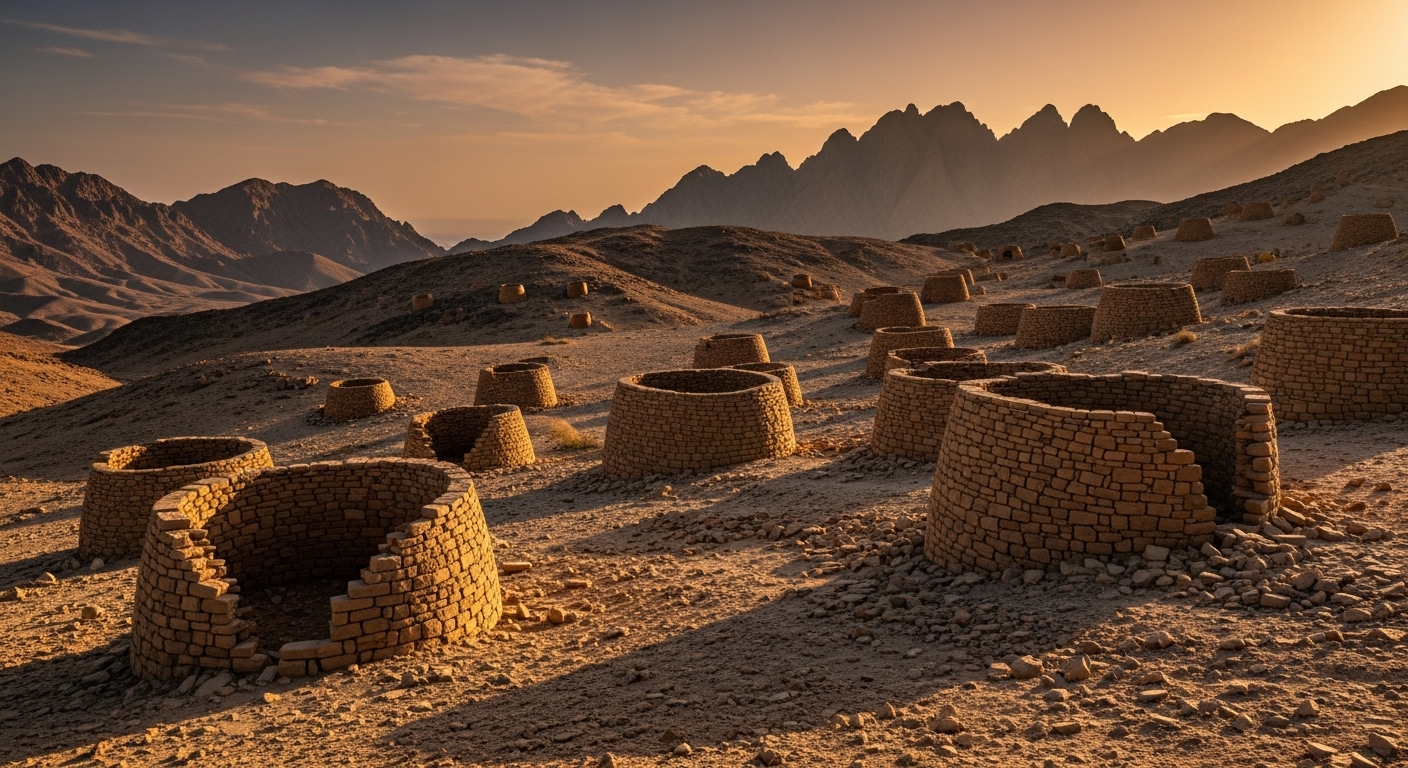
Rising dramatically from the Al Ain desert, Jebel Hafeet is not only a striking natural landmark but also one of the UAE’s most important archaeological sites. Scattered along its northern foothills are hundreds of beehive-shaped stone tombs, silent sentinels that bear witness to a sophisticated culture that flourished during the Bronze Age. These tombs offer a poignant and direct connection to the lives, deaths, and beliefs of the people who inhabited this region five millennia ago.
History
The Jebel Hafeet tombs date to the Hafit period (3200-2600 BCE), the earliest chapter of the Bronze Age in southeastern Arabia. This period is named after the mountain itself, following the pioneering archaeological work in the 1950s that first identified this distinct cultural phase. The tombs predate the more famous Umm an-Nar civilization, representing the initial stages of the social complexity that would come to define the region. Their construction marks a significant shift from earlier, simpler burial practices to more elaborate, monumental architecture.
Key Features
The tombs are characterized by their distinctive construction and location:
- Architecture: Each tomb is a single-chambered, circular structure built from local, unworked or roughly dressed stone, forming a distinctive “beehive” shape. They range from 2 to 4 meters in diameter and were originally covered by a cairn of stones.
- Strategic Placement: The tombs are strategically located on high terraces and ridges of Jebel Hafeet, ensuring their visibility across the landscape. This prominent placement suggests they served as territorial markers for early tribal groups, as well as repositories for the dead.
- Burial Goods: Although many tombs were looted in antiquity, excavations have revealed precious grave goods, including copper and stone vessels, beads made of local and imported materials, and rare examples of pottery from Mesopotamia. These finds indicate trade connections and a belief in an afterlife where such items would be needed.
Cultural Significance
The Jebel Hafeet tombs are culturally significant for several reasons. They represent the emergence of social stratification, as the effort required to build them and the valuable goods buried within suggest that certain individuals or families held elevated status. Their collective nature, however, also points to strong communal ties. The tombs are a tangible manifestation of early belief systems, reflecting a culture that invested significant resources in honoring its dead and marking its ancestral territory, laying the ideological foundations for the societies that would follow.
Modern Relevance
Today, the Jebel Hafeet tombs are a protected UNESCO World Heritage site as part of the “Cultural Sites of Al Ain.” They are a major focus of heritage tourism and public education, with signposted trails allowing visitors to walk among these ancient structures. For the modern UAE, they provide an undeniable and powerful link to an incredibly distant past, reinforcing a national identity that is rooted in millennia of human history. They stand as a humbling reminder of the deep, enduring human connection to this land.
Conclusion
The tombs of Jebel Hafeet are far more than piles of ancient stone. They are the enduring legacy of the Hafit people, the pioneers of the UAE’s Bronze Age. Their silent presence on the mountainside continues to speak volumes about the origins of complex society in the region, offering invaluable insights into early concepts of community, status, and the spiritual world. As the earliest monumental structures in the country, they rightfully hold a place of honor at the foundation of the UAE’s rich and layered history.