

Introduction
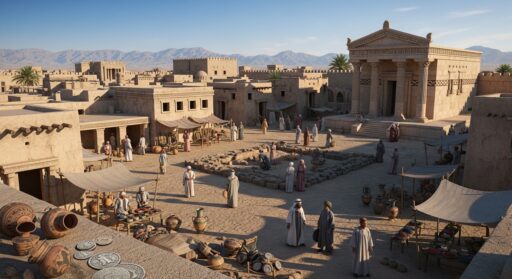
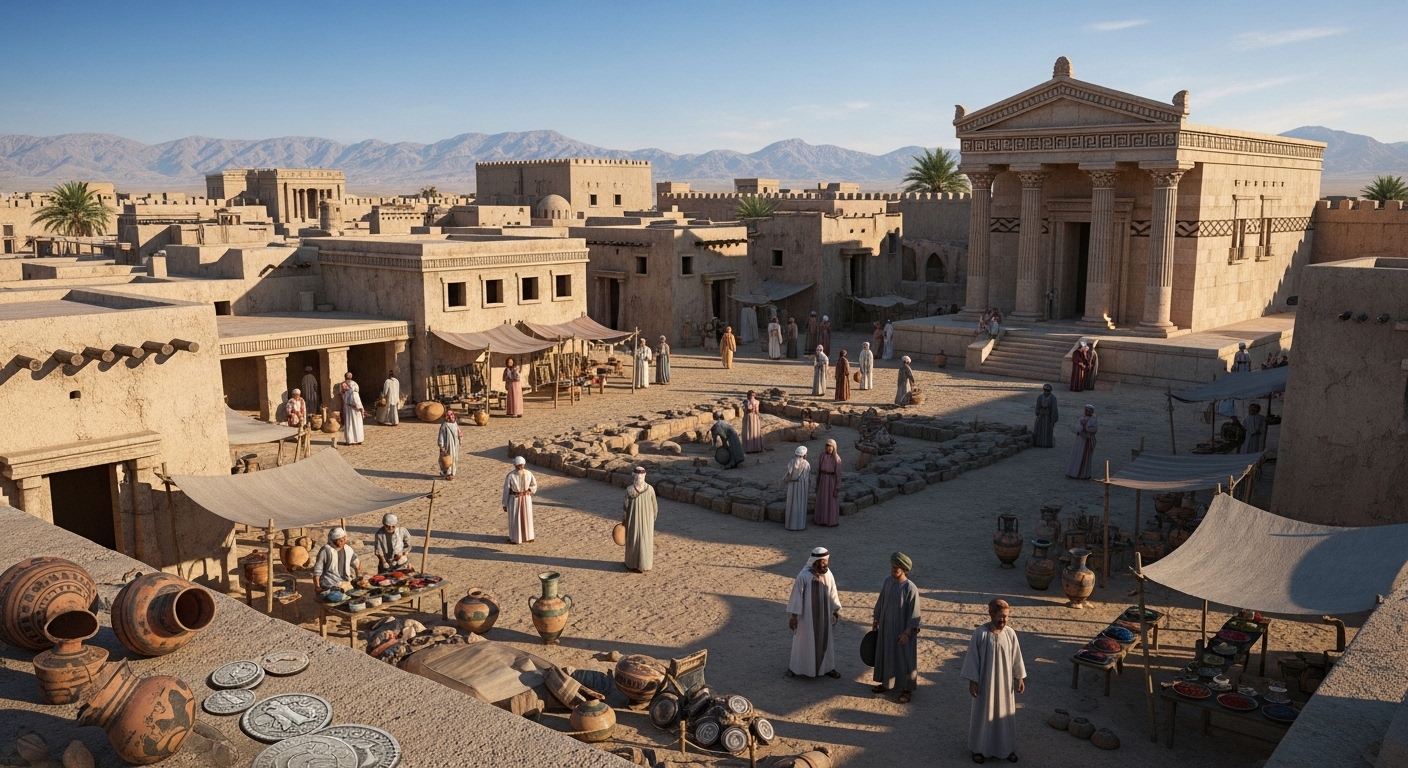
On the coast of Umm Al Quwain lies Ed-Dur, one of the largest and most important archaeological sites in the UAE. This ancient city, whose name means “the houses” in Arabic, was a thriving port and settlement during the first centuries CE. Its discovery and ongoing excavation have unveiled a startling chapter of history, providing compelling evidence of the region’s extensive trade and cultural connections with the Roman Empire, the Hellenistic world, and beyond.
History
Ed-Dur flourished from approximately the 1st century BCE to the 1st century CE, a period that coincided with the height of the Roman Empire and the Parthian Empire’s control over Mesopotamia. The site was a major nodal point in the Indian Ocean trade network. It was likely known to classical geographers and was a contemporary of, and possibly a rival to, the inland center of Mleiha. After a period of prosperity, the city was mysteriously abandoned around 200 CE, its memory fading into the sands until its rediscovery in the 1970s.
Key Features
The sprawling site of Ed-Dur covers over five square kilometers and includes a diverse array of structures and artifacts:
- Temple of the Sun God: A unique, square-shaped temple dedicated to the Semitic sun god, Shamash. A stone altar bearing a dedicatory inscription in Aramaic to the god was found here, pointing to diverse religious practices.
- Tombs and Burial Mounds: Hundreds of individual graves, including a distinctive barrel-vaulted tomb, have been excavated, yielding a wealth of grave goods.
- Settlement Remains: Evidence of stone houses, wells, and a possible fortification indicate a substantial and well-organized urban settlement.
- International Artefacts: Finds include Roman glassware, Indian pottery, Characenian coins (from the Parthian Empire), and a beautiful bronze statue of a small boy, often interpreted as representing the Greco-Roman god Eros, demonstrating the city’s cosmopolitan character.
Cultural Significance
Ed-Dur is culturally significant because it provides undeniable proof of the UAE’s direct involvement in the global economy of the classical era. It was a multicultural emporium where local tribes, Arab traders, and merchants from the Roman and Parthian worlds interacted. The religious syncretism seen at the temple of Shamash shows how local beliefs incorporated and adapted foreign influences. Ed-Dur challenges the notion that southeastern Arabia was isolated, instead painting a picture of a dynamic, outward-looking society that played a strategic role in ancient long-distance trade.
Modern Relevance
The ongoing excavations at Ed-Dur are of immense importance to understanding the UAE’s place in ancient globalisation. The site is a key piece in the puzzle of the region’s history, showcased in national museums and academic publications. It reinforces the modern UAE’s identity as a nation with a long-standing tradition of international trade and cultural openness. For researchers, Ed-Dur offers an almost unparalleled opportunity to study the complex interactions between the great empires of the West and the civilizations of the East.
Conclusion
Ed-Dur stands as a monumental testament to a forgotten era of prosperity and connectivity. This lost city, resurrected from the dunes, reveals that the shores of the UAE were once home to a vibrant, cosmopolitan community that served as a crucial bridge between the classical world and the Indian Ocean. The story of Ed-Dur enriches the historical narrative of the nation, providing a deep and fascinating context for the UAE’s modern role as a global crossroads.