

Introduction
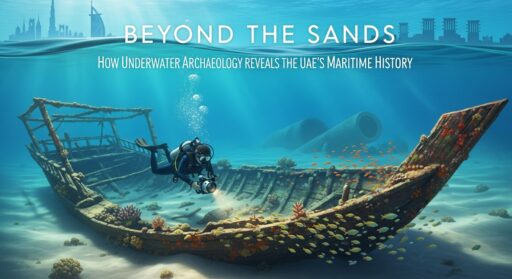
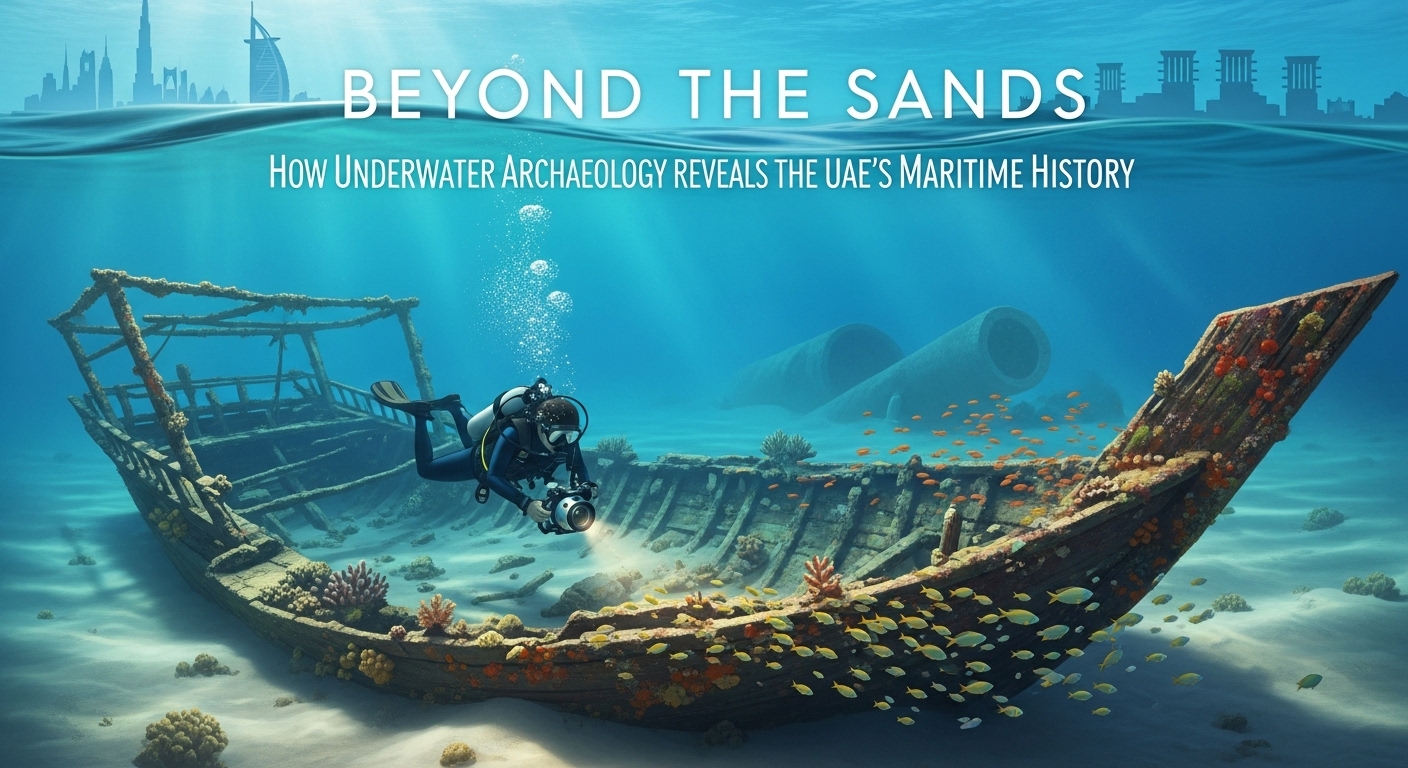
The history of the United Arab Emirates is inextricably linked to the sea, a relationship traditionally explored through land-based sites and historical texts. However, a new frontier of discovery has emerged beneath the waves: underwater archaeology. By exploring shipwrecks, submerged settlements, and ancient anchorages, this discipline is dramatically expanding our understanding of the UAE’s rich maritime heritage, revealing secrets of trade, technology, and daily life that have lain hidden on the seabed for centuries.
History
Systematic underwater archaeology in the UAE is a relatively recent field, gaining momentum in the 1990s and 2000s. The waters of the Gulf have witnessed millennia of maritime activity, from the earliest reed-boat traders of the Bronze Age to the grand wooden dhows of the Islamic and pearling eras. Each shipwreck is a time capsule, preserving a moment of disaster that offers an unparalleled snapshot of the past. These submerged sites complement the terrestrial record, providing direct evidence of the vessels that carried the goods found at inland sites like Ed-Dur and Mleiha.
Key Features
Underwater explorations have yielded significant finds:
- The Sadana Island Shipwreck (Egypt): While in the Red Sea, its excavation involved UAE experts and showcased the type of Indian Ocean trade vessels that would have called at Emirati ports, carrying cargoes of coffee, ceramics, and coconuts in the 18th century.
- The Jazirat Al Hamra Wreck: A more local discovery, this 19th-century dhow wreck provides a direct link to the region’s boat-building and trading traditions just before the modern era.
- Prehistoric Shorelines: Investigations into now-submerged paleo-shorelines aim to find evidence of early human migration and settlement from when sea levels were lower.
- Anchors and Ports: The discovery of ancient stone anchors and the mapping of old port structures help archaeologists understand the evolution of harbors and navigation techniques.
Cultural Significance
This underwater heritage is culturally significant because it provides tangible proof of the maritime skills and economic activities that defined the coastal communities of the UAE for thousands of years. It validates the historical accounts of a seafaring people and reveals the technological evolution of the dhow. The cargoes found on wrecks are a direct record of the commodities that fueled the regional economy—pearls, dates, copper, and pottery—and the luxury goods that were imported. It tells the story of the anonymous sailors, merchants, and shipwrights who were the backbone of the region’s prosperity.
Modern Relevance
The UAE has made significant strides in embracing this field. The Zayed National Museum and other institutions are actively involved in supporting underwater research and conservation. Training programs are building a cadre of local Emirati marine archaeologists. Furthermore, this research has practical implications for coastal development projects, ensuring that underwater cultural heritage is identified and protected. For the public, exhibitions featuring recovered artifacts make this hidden history visible, fostering a greater appreciation for the nation’s deep-rooted connection to the sea.
Conclusion
Underwater archaeology is pulling back the curtain on a dimension of Emirati history that was once invisible. By venturing beyond the sands and into the sea, researchers are recovering the physical evidence of the voyages that shaped the nation’s destiny. Each wreck and artifact salvaged from the depths adds a crucial piece to the historical puzzle, confirming that the story of the UAE is, at its heart, a story written on the water.